
Fort Collins vs Denver: Which Colorado City Is Right for You?
Fort Collins vs Denver is one of the most common comparisons buyers make when relocating to Colorado, and the answer almost always comes down to a single trade-off: do you want a major metro job market and urban lifestyle, or a smaller, quieter, outdoor-oriented city with a lower cost of living and a 60-minute buffer from the Denver core? Both cities are genuinely excellent places to live. They are just excellent in different ways, and the wrong choice is almost always made when buyers compare them on price alone without accounting for the lifestyle, commute, and job market implications of each. If you are researching moving to Fort Collins or weighing whether Denver might be the better fit, this guide lays out the real differences across every category that matters.
Table of Contents
Fort Collins vs Denver At a Glance
| Category | Fort Collins | Denver |
|---|---|---|
| Cost of living index | 137 (US avg = 100) | 147 (US avg = 100) |
| Median home value | ~$548,000 to $564,000 | ~$586,700 |
| Median rent | ~$1,661/month | ~$1,770/month |
| Median household income | ~$83,598 | ~$91,681 |
| Population | ~175,000 city / 350,000+ metro | ~750,000 city / 2.9M+ metro |
| Crime index | 31.9 (Low) | 47.8 (Moderate) |
| Distance between cities | ~65 miles via I-25 | ~60 to 75 min drive (normal traffic) |
| Nearest major airport | DEN, ~80 miles | DEN, within the metro area |
| Professional sports | None locally | NFL, NBA, MLB, NHL, MLS |
Cost of Living
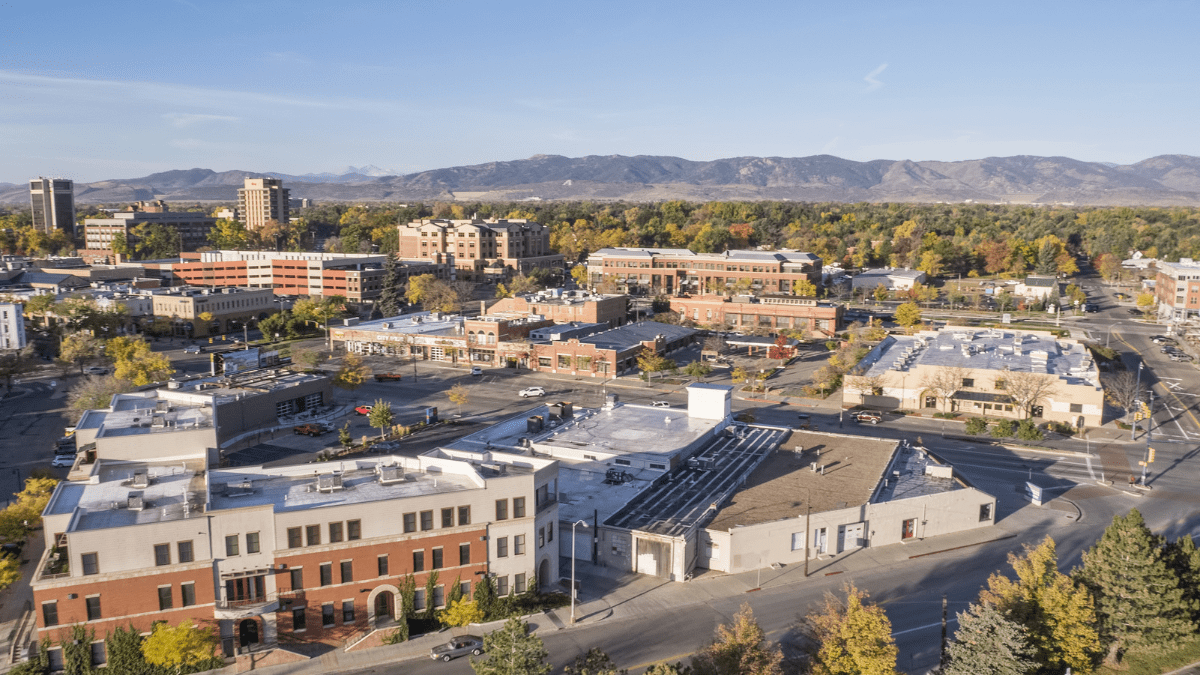
Fort Collins is cheaper than Denver, and the gap is more meaningful than it might look on a spreadsheet. According to CostToLive, Fort Collins carries a cost of living index of 137 versus Denver’s 147, a difference of roughly 7 to 8 percent across everyday expenses. Numbeo’s comparison puts it even more directly: to maintain the same standard of living you have in Denver, you would need to earn roughly 23 percent more income than in Fort Collins when rent is factored in.
In practical dollar terms, Fort Collins renters pay around $109 per month less than Denver renters on average, which adds up to over $1,300 per year. Groceries, utilities, and transportation run comparably between the two cities since they share the same state tax structure, though Denver’s public transit system is notably more developed. Fort Collins raised its total sales tax to 8.3 percent in January 2026, so buyers should factor that into everyday cost comparisons.
Home Prices and Real Estate
The home price gap between Fort Collins and Denver is real but narrower than many buyers expect. As of mid-2026, the median home value in Fort Collins runs roughly $548,000 to $564,000 depending on the data source, while Denver’s median sits around $586,700. That is a gap of roughly $20,000 to $40,000 at the median, which is meaningful but not the dramatic savings buyers sometimes expect when they hear “smaller city.”
Where Fort Collins delivers more distinct value is in what you get for the dollar. In Fort Collins, a $550,000 budget more reliably gets you a single-family home with a yard in an established neighborhood. In Denver at the same price, buyers are often competing for condos, townhomes, or homes in areas farther from the urban core. For buyers who specifically want a yard and a house rather than a condo, Fort Collins tends to deliver more per dollar even when the headline median prices look close.
→ Related: What Homes Cost in Fort Collins
Jobs and Salaries
This is where Denver has a clear and honest advantage over Fort Collins. Denver employers pay approximately 2.9 percent more for comparable roles, and the sheer scale of the Denver metro job market means more options across more industries, particularly in finance, aerospace, federal government contracting, healthcare administration, and corporate headquarters roles. The median household income in Denver is roughly $91,681 versus $83,598 in Fort Collins, a gap of about $8,000 per year.
Fort Collins is not a weak job market by any means. Colorado State University, Hewlett-Packard, Intel, Broadcom, and UCHealth anchor a stable local economy with a strong tech, bioscience, and clean energy employment base. The city’s unemployment rate sat at 3.2 percent as of 2026. But for buyers in industries where Denver’s metro concentration creates dramatically more opportunity, the salary and career ceiling in Fort Collins can feel real. Remote workers face no such trade-off and tend to find Fort Collins a better overall value than Denver for exactly that reason.
→ Related: Cost of Living in Fort Collins Colorado
Commute and Transportation
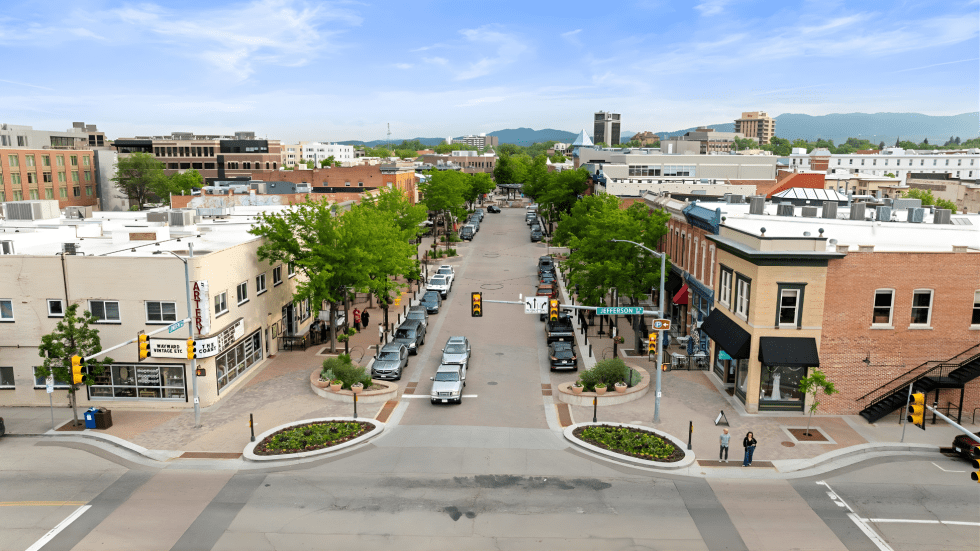
The I-25 corridor between Fort Collins and Denver is one of the most frequently cited pain points for buyers who try to split the difference by living in Fort Collins and working in Denver. Under normal traffic conditions, the drive runs 60 to 75 minutes each way. During rush hour, after snowfall, or when construction closes lanes, that same drive can stretch to 90 minutes or more each way, meaning some commuters are spending 3 hours per day in the car.
That is not a hypothetical worst case, it is a realistic regular occurrence for Fort Collins residents with Denver offices. The Bustang commuter bus service does run along the I-25 corridor and gives commuters a way to skip the drive, but it is not as flexible or frequent as the transit options available within Denver itself. Denver has a light rail and commuter rail system, bike-share programs, and a denser bus network that makes car-free or car-light living genuinely viable. Fort Collins is bikeable within the city and has the Transfort bus system, but regional transit options remain limited compared to Denver.
→ Related: How Far Is Fort Collins From Denver
→ Related: Best Craft Breweries in Fort Collins
Lifestyle and Downtown Scene
Fort Collins and Denver offer genuinely different lifestyle experiences, and neither is objectively better. Fort Collins has a walkable, human-scaled Old Town with craft breweries, restaurants, live music, farmers markets, and a community feel that residents frequently describe as one of the city’s best qualities. The pace is slower, the neighborhoods are quieter, and there is a Midwestern approachability to daily life that people either love or find a little too quiet.
Denver is a major metro with professional sports teams across all five major leagues, a dense urban core, a nightlife scene that runs well past midnight, concert venues, major convention infrastructure, and a cultural and dining scene that Fort Collins simply cannot replicate at its size. For buyers who want consistent access to big-city entertainment without driving to it, Denver is the honest answer. For buyers who want to walk to a locally owned coffee shop, know their neighbors, and be 20 minutes from a trailhead, Fort Collins wins.
Outdoor Recreation

Both cities give residents access to Colorado’s famous outdoor lifestyle, but Fort Collins has a measurable geographic advantage. Horsetooth Reservoir is effectively within the city limits and offers boating, kayaking, fishing, and hiking. Rocky Mountain National Park and Estes Park are about an hour’s drive. Cache la Poudre River runs through the region and is the only federally designated Wild and Scenic River in Colorado. The foothills are visible from most neighborhoods.
Denver has its own strong outdoor access, with Red Rocks Amphitheatre nearby, Cherry Creek trails, and a similar drive time to the major ski resorts along I-70. The difference is that Fort Collins’ outdoor access feels more immediate and integrated into daily life, while Denver’s requires a bit more intentional planning and highway time. For buyers whose outdoor lifestyle is central to why they chose Colorado in the first place, Fort Collins tends to deliver more of it with less friction.
→ Related: Best Day Adventures from Fort Collins
Schools and Families
Fort Collins schools fall under the Poudre School District, which includes roughly 52 schools and consistently earns strong performance ratings. Fort Collins also has one of the highest educational attainment rates of any mid-sized city in the country, with 93.6 percent of residents having completed high school compared to a national average of 83 percent. Colorado State University’s presence also creates a uniquely well-educated community baseline that benefits the school culture across the city.
Denver has a larger and more varied school landscape. Denver Public Schools includes dozens of highly rated schools, particularly magnet programs and charter options, but performance varies more dramatically by neighborhood than it does in Fort Collins. For families who want reliable, strong school performance without having to research individual schools block by block, Fort Collins offers a more consistent baseline than Denver’s more complex district-wide picture.
Safety and Crime

Fort Collins is meaningfully safer than Denver by every major crime metric. Numbeo’s comparison places Fort Collins at a crime index of 31.9 with a safety scale of 68.1, compared to Denver’s crime index of 47.8 and safety scale of 52.2. Fort Collins residents report low levels of concern around robbery, mugging, car theft, and property crime. Denver residents report moderate concern across most of those same categories.
It is worth noting that crime in Fort Collins is not uniformly distributed. The North College corridor historically has higher activity than the southern and western parts of the city, while areas near Old Town and in the southeast tend to score among the lowest in the region. Denver similarly varies significantly by neighborhood, with some areas well below the city average and others substantially above it. The overall comparison still favors Fort Collins by a clear margin.
Who Should Choose Fort Collins
Fort Collins is the right choice for buyers who want a quieter, smaller-city lifestyle with a walkable downtown, genuinely lower crime, strong schools, immediate mountain and outdoor access, and a community feel that Denver’s scale cannot replicate. It is particularly well suited to families with school-age children, retirees, remote workers, Colorado State University employees and faculty, and buyers who moved to Colorado specifically for the outdoor lifestyle and want it to be part of their daily routine rather than a weekend trip.
Fort Collins also works well for buyers who are willing to accept that Denver’s job market, nightlife, and major-metro amenities will require a drive, and who see that trade-off as worth it for the lifestyle gains.
Who Should Choose Denver
Denver is the right choice for buyers who need daily access to a major metro job market, travel frequently from Denver International Airport, want professional sports and big-city entertainment on a regular basis, or prefer the energy and density of a large urban core. Denver also makes more sense for buyers whose careers are in industries concentrated in the metro, including aerospace, financial services, federal contracting, or corporate headquarters roles.
Denver’s light rail and commuter rail system also makes it a genuine option for buyers who do not want to own a car or want to minimize driving as part of their daily life, something Fort Collins cannot currently offer at the same level. For buyers who are moving to Fort Collins and second-guessing that decision based on Denver’s larger market, the question worth asking is how often you actually need what Denver has versus what Fort Collins delivers every single day.
Frequently Asked Questions
Is Fort Collins cheaper than Denver?
Yes, Fort Collins is cheaper than Denver. Fort Collins has a cost of living index of 137 compared to Denver’s 147 (US average = 100), and Fort Collins median home values run around $548,000 to $564,000 versus Denver’s approximately $586,700. Rent in Fort Collins also averages about $109 per month less than in Denver.
How far is Fort Collins from Denver?
Fort Collins is approximately 65 miles north of Denver, about a 60 to 75 minute drive via I-25 under normal traffic conditions. During peak commute hours or after heavy snowfall, that drive can stretch to 90 minutes or more, which is a major consideration for anyone planning to commute between the two cities regularly.
Does Fort Collins have better schools than Denver?
Fort Collins schools under the Poudre School District generally receive strong ratings, and the city has a high educational attainment rate, with 93.6 percent of residents having graduated high school versus a national average of 83 percent. Denver has a wider range of school performance across its districts, with highly rated options in specific neighborhoods but more variability overall.
Is Fort Collins safer than Denver?
Fort Collins has a lower crime index than Denver. Numbeo rates Fort Collins with a crime index of 31.9 and a safety scale of 68.1, compared to Denver’s crime index of 47.8 and safety scale of 52.2. Fort Collins residents report lower levels of concern across most crime categories compared to Denver residents.
Are salaries higher in Denver than Fort Collins?
Yes, salaries in Denver are generally higher than in Fort Collins. Denver employers typically pay around 2.9 percent more for comparable roles, and the median household income in Denver is approximately $91,681 versus $83,598 in Fort Collins. However, those higher Denver salaries are often offset by Denver’s higher housing costs and overall cost of living.
Who should choose Fort Collins over Denver?
Fort Collins is the better choice for buyers who prioritize a quieter, smaller-city lifestyle, lower crime, a walkable downtown, proximity to mountains and outdoor recreation, and strong schools, especially if they work locally or remotely. Denver is the better choice for buyers who need access to a major metro job market, frequent air travel from DIA, professional sports, and a dense urban lifestyle.
~ By The Levi Group Brokered by Real ~
Your Personal Guide to Fort Collins

Thank you for visiting our blog dedicated to what it is like to live in Fort Collins Co. We created all this content with you in mind. This site has the most comprehensive content about Fort Collins Colorado. If you have any questions please don’t hesitate to reach out to us. We would love to visit with you and answer any questions you have.

Jason Levi
The Levi Group Brokered by REAL, LLC
Call Me: 970-426-8916
Text Me: 970-426-8916
Email Me: jason@thelevigroup.net
Stay Up to Date – Subscribe & Follow
Youtube Channel: @LeviGroupNoco
Facebook: Jason Levi
Instagram: @noco.jas
POPULAR POSTS
VIDEO ABOUT FORT COLLINS COLORADO
Have Questions?
INSPIRATIONAL QUOTE
The Fort Collins Experience is your comprehensive guide to everything Fort Collins Colorado. Whether you’re searching for the best things to do, researching schools and neighborhoods, exploring local breweries and outdoor adventures, hunting for great restaurants and hotels, or staying up to date on Fort Collins real estate trends — you’ll find it all here in one place. This site was built with a single goal: to give you a genuine, firsthand understanding of what it’s really like to live in Fort Collins. As a longtime resident and full-time Realtor, I’ve walked these streets, explored these communities, and experienced every corner of this city. I share that local insight so you don’t have to spend hours piecing together scattered information like I once did. Whether you’re relocating, investing, raising a family, or simply curious, The Fort Collins Experience will show you why so many people are drawn to northern Colorado. Fort Collins isn’t just a location — it’s a lifestyle shaped by nature, community, creativity, and opportunity. If you’re ready to discover what makes Fort Collins Colorado one of the most desirable places to live in the state, you’re exactly where you need to be.