
Pros and Cons of Living in Loveland Colorado
The pros and cons of living in Loveland Colorado come down to a simple trade-off: you get a genuinely affordable slice of the Front Range lifestyle, with mountain access, a thriving arts scene, and small-city charm, but you also take on rising insurance costs, temperamental weather, and a commute-dependent job market if you work outside the city. Loveland sits about 50 miles north of Denver and a short drive south of Fort Collins, and for buyers weighing where to put down roots in Northern Colorado, including anyone exploring moving to Fort Collins and its surrounding towns, Loveland deserves a serious, clear-eyed look rather than just the highlight reel.
Table of Contents
- Loveland Colorado At a Glance
- Home Prices in Loveland Colorado
- Location and Commute Access
- Outdoor Recreation
- Arts Scene and Downtown Loveland
- Healthcare, Schools, and Local Economy
- Housing Variety in Loveland
- Cost of Living Reality
- Growth and Traffic Along the Corridor
- Weather in Loveland Colorado
- Jobs and Commute Considerations
- Nightlife and Entertainment
- Water, HOAs, and Car-Dependent Living
- Frequently Asked Questions
Loveland Colorado At a Glance
| Category | Detail | Verdict |
|---|---|---|
| Median home value | Approximately $475,000 to $510,000 (2026) | ✅ Lower than Fort Collins and Boulder |
| Distance to Denver | Roughly 50 miles, about 50-55 minutes via I-25 | ✅ Strong Front Range access |
| Distance to Fort Collins | About 10-15 miles, a 15 to 20 minute drive | ✅ Easy access to jobs and CSU |
| Population | Approximately 76,000-78,000 residents | ✅ Small city feel with real amenities |
| Sunny days per year | 300+, similar to the rest of the Front Range | ✅ Year-round outdoor lifestyle |
| Weather risk | Hail, wind events, occasional heavy snow | ⚠️ Rising insurance premiums |
| Job market | Diversified locally; higher-paying roles often in Fort Collins or Denver | ⚠️ Commute-dependent for some fields |
| Known for | The Sweetheart City, Benson Sculpture Garden, Boyd Lake State Park | ✅ Strong arts and outdoor identity |
| Major healthcare | UCHealth Medical Center of the Rockies, McKee Medical Center | ✅ Two full-service hospitals in city |
Home Prices in Loveland Colorado
Loveland’s home prices are one of its strongest selling points on the Front Range. As of 2026, the median home value sits in the high $400,000s to low $500,000s, generally cheaper than comparable homes in Fort Collins and dramatically less expensive than Boulder, which remains one of the priciest housing markets in Colorado. Is Loveland actually a good value compared to its neighbors? For most buyers, yes: you get the same Northern Colorado access to mountains, trails, and a strong job corridor, often for tens of thousands of dollars less than a similar home a short drive north or south.
The market itself has also normalized. Inventory has been running in the 350 to 400 home range on any given month, with homes typically spending around 45 to 75 days on market depending on price point and season, a far cry from the frantic bidding wars of 2021. That gives buyers room to actually compare properties, negotiate, and use inspections, rather than waiving contingencies just to compete. For anyone weighing Fort Collins vs Loveland, price is usually the first column they fill in, and Loveland often wins it. Against Boulder specifically, the gap is even wider, since Boulder routinely posts some of the highest median home prices in the entire state, often well over double what a comparable Loveland home costs.
Location and Commute Access
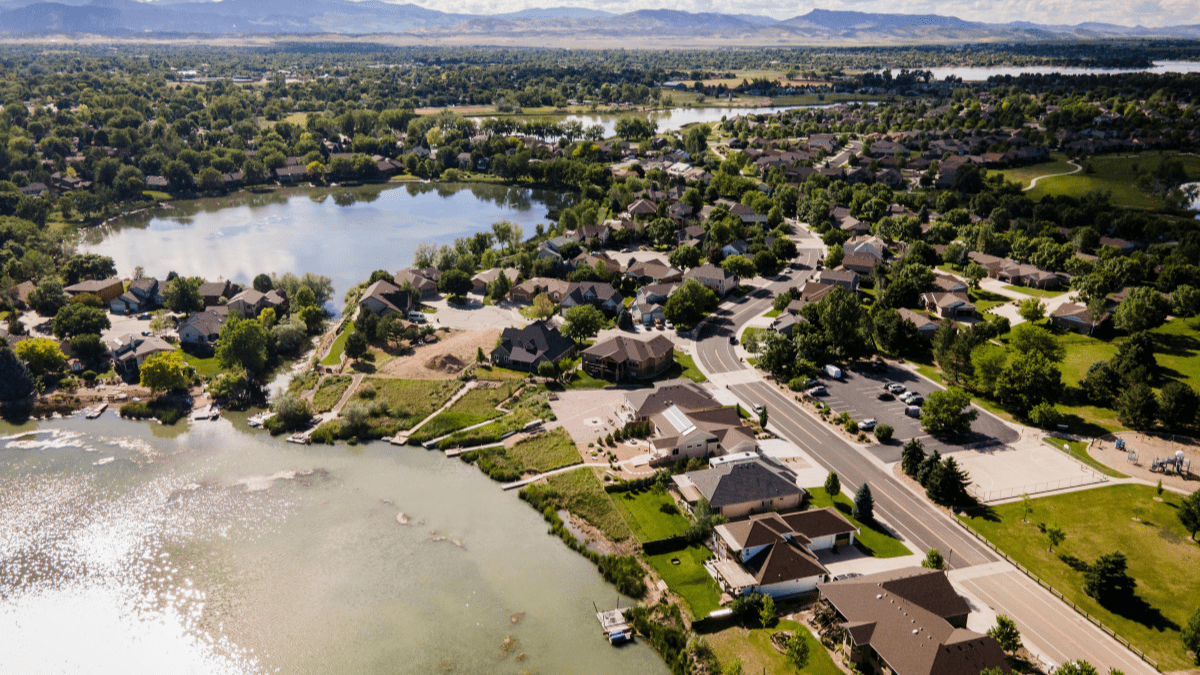
Loveland’s geography is arguably its most underrated asset. The city sits roughly 50 miles north of Denver, about a 50 to 55 minute drive via I-25, and just 10 to 15 miles south of Fort Collins, putting Colorado State University, downtown Fort Collins, and the broader Fort Collins job market within a 15 to 20 minute drive. The foothills are essentially in Loveland’s backyard, and Estes Park and the entrance to Rocky Mountain National Park are reachable in under an hour via the Big Thompson Canyon, one of the more scenic drives in the state.
Loveland also has its own general aviation airport, the Northern Colorado Regional Airport, while Denver International Airport is about 70 to 80 miles away for major commercial travel. What does that combination actually deliver? A smaller, quieter city to live in day to day, with both a major metro and world-class mountain access within reach, a balance that is genuinely difficult to find elsewhere on the Front Range.
→ Related: How Far Is Fort Collins From Denver
Outdoor Recreation
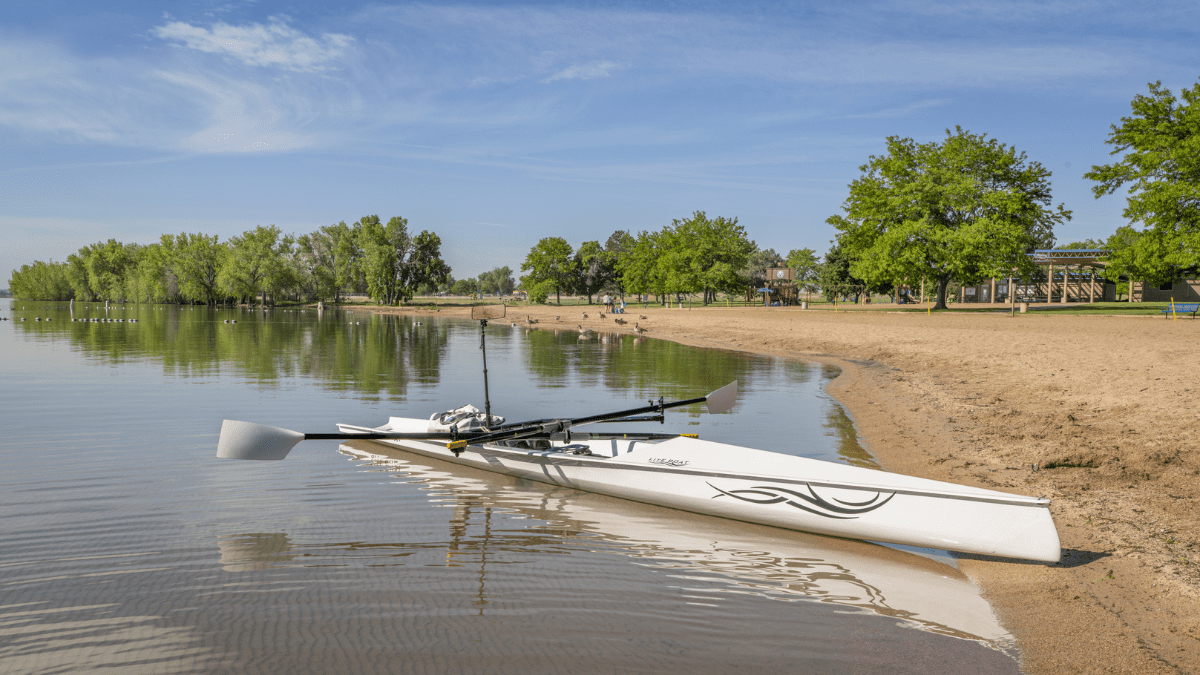
For an active household, Loveland’s outdoor access is not a someday-drive-two-hours proposition, it is built into daily life. Boyd Lake State Park sits within the city limits and offers boating, wakeboarding, fishing, camping, and miles of shoreline trail, all with Rocky Mountain views in the background. Lake Loveland has a popular swim beach that fills up with families through the summer months. Devil’s Backbone Open Space, just west of town, is known for its dramatic rock formation and the hikeable “keyhole” arch, plus miles of trail for hiking and mountain biking right at the edge of the city.
Because the climate is semi-arid with 300-plus sunny days a year, most of these activities run nearly year-round, with real ski country still a manageable drive away once winter sets in. Buyers comparing recreation-per-dollar across Front Range cities consistently find that Loveland offers big-mountain access at a smaller-city price point.
Arts Scene and Downtown Loveland
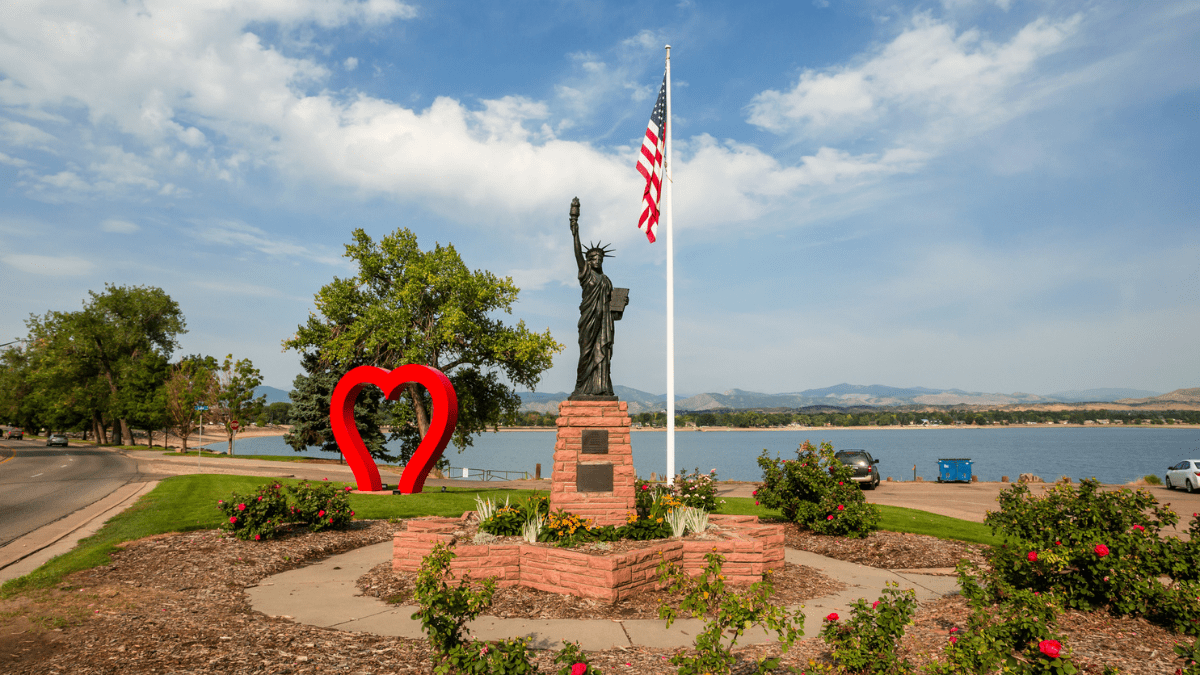
Loveland earned the nickname “Sweetheart City” through its decades-old Valentine’s Day card re-mailing program, in which volunteers hand-stamp cards from around the world each February, alongside the community-wide Sweetheart Festival. That charm is real, but the deeper story is the city’s concentration of working artists. Loveland is home to a notable community of sculptors and bronze foundries, anchored by the Benson Sculpture Garden, a 10-acre park that displays roughly 178 to 188 permanent bronze sculptures valued at more than $5 million.
Each August, the garden hosts Sculpture in the Park, the largest outdoor juried sculpture show in the country, with more than 160 national and international artists displaying over 2,000 pieces over a single weekend. The 2026 show marks its 42nd year and runs August 7 through 9 at Benson Sculpture Garden. Downtown itself has undergone a real revitalization in recent years, with Foundry Plaza, a growing roster of breweries and restaurants, a summer concert series, and a walkable core that holds its own against much larger cities.
→ Related: Best Craft Breweries in Fort Collins
Healthcare, Schools, and Local Economy
Healthcare access in Loveland is a genuine strength rather than an afterthought. UCHealth Medical Center of the Rockies has been ranked among the best hospitals in Colorado, and McKee Medical Center adds a second full-service option within the city, both part of the broader UCHealth and Banner Health networks that serve Northern Colorado. For families and retirees who want real medical access without a drive to Denver, that matters.
Loveland’s economy is also more diversified than many similarly sized cities, spanning advanced manufacturing, aerospace and aviation, bioscience, food manufacturing, and healthcare, with employers such as Banner Health, the City of Loveland, and Hach among the larger local employers. Combined with proximity to the Colorado State University ecosystem in Fort Collins, that diversification has helped the local economy stay relatively stable through broader economic swings. Families considering schools should always check ratings for the specific neighborhood under consideration, since school performance can vary block to block even within the same district.
Housing Variety in Loveland
One advantage that rarely makes the highlight reel is just how much variety Loveland offers within a single, mid-sized city. Buyers can choose from character-filled older homes near downtown, established mid-century neighborhoods, brand-new construction in subdivisions on the city’s edges, and larger lots with mountain views as the terrain rises toward the foothills to the west, including some acreage and equestrian-style properties. East side, west side, downtown, and new construction each represent a genuinely different price point and lifestyle.
That range means most buyer profiles can find something that fits, whether the priority is a starter home under budget, a family-friendly cul-de-sac, or a few acres with a view. Many towns Loveland’s size offer only one or two of those options. Loveland offers most of them within a 15-minute drive of each other.
Cost of Living Reality
Here is the honest counterpoint most buyers find out after closing: “cheaper than Boulder” does not mean cheap. The overall cost of living in Loveland still runs above the national average, and home prices have climbed substantially over the past several years even with recent cooling. Buyers relocating from lower-cost states are sometimes surprised to find they are getting less house for more money than they expected back home.
The mortgage itself is also only part of the picture. Colorado’s statewide property tax rate runs around 0.55 percent, which is relatively low, but home insurance on the Front Range has been climbing noticeably, driven largely by hail and wildfire risk discussed further below. The realistic framing for buyers is that Loveland is a relative value within Colorado, not an inexpensive place to live in absolute terms, and budgeting should account for taxes and insurance, not just the listing price.
Growth and Traffic Along the Corridor
Growth along this corridor is a trade-off worth understanding before you buy. The Loveland, Fort Collins, Windsor, and Johnstown area has been one of the fastest-growing in Colorado, and that momentum cuts both ways. On one hand, it supports job creation, new amenities, and relatively resilient home values. On the other, it has brought heavier traffic and ongoing construction, particularly along I-25, where commute times to Fort Collins or Denver can stretch considerably during peak hours.
Some longtime residents note that the small-town character that originally drew them to Loveland has shifted as new rooftops and retail continue to fill in around the city’s edges. Buyers who specifically want a quiet, unchanging small town should know that this part of Northern Colorado is very much still in motion, and that pace is not expected to slow in the near term.
→ Related: How Far Is Fort Collins From Denver
Weather in Loveland Colorado
Loveland’s 300-plus annual sunny days are real, but the weather deserves an honest look before you commit. Strong wind events roll through Northern Colorado along the Front Range, occasionally severe enough to trigger high-wind warnings, down tree branches and fencing, and make driving difficult for high-profile vehicles on I-25. Combined with the region’s dryness, those wind events also contribute to red-flag fire-danger days and wildfire risk in the surrounding foothills.
Hail is the other major factor. Northern Colorado sits within what is sometimes informally called “hail alley,” and a severe hailstorm can damage roofs and vehicles across an entire neighborhood in a matter of minutes. This risk is a primary driver behind rising home insurance premiums across the Front Range, which is why buyers should always ask about a roof’s age and any prior hail-related claims before making an offer. Add occasional heavy snow events and large daily temperature swings, and the climate, while mostly mild and sunny, does require some adjustment.
Jobs and Commute Considerations
Loveland’s economy is genuinely diversified, but wage expectations should stay realistic. A meaningful share of the region’s higher-paying positions are concentrated in Fort Collins, particularly around the Colorado State University ecosystem, or further south toward Denver and the Boulder technology corridor, where salaries often run higher than what local Loveland employers pay. For workers in those fields, Loveland often becomes a place to live while commuting out, which reconnects directly to the traffic concerns above. Remote workers face no such trade-off, but commuters should map their actual drive time before committing to a specific neighborhood.
Air travel carries a similar caveat. The Northern Colorado Regional Airport offers convenient general aviation and limited commercial service, but most travelers heading to a major hub will drive to Denver International Airport, roughly an hour and a half away depending on traffic and time of day.
→ Related: Best Neighborhoods in Northern Colorado
Nightlife and Entertainment
For buyers who want dense big-city nightlife, Loveland will likely fall short. Downtown has a genuinely solid brewery, restaurant, and arts scene for a city its size, but it is not a late-night entertainment hub. Buyers looking for a dense nightlife scene, frequent major concerts, professional sports on a regular basis, or restaurants open well past 10 p.m. will generally need to drive to Denver for that experience.
For many buyers, particularly families, remote workers, and retirees, that quieter evening pace is not a downside at all, it is the entire appeal of choosing Loveland over a larger metro. Buyers who want constant evening activity, however, should set expectations accordingly before moving.
Water, HOAs, and Car-Dependent Living
A handful of practical details tend to surprise new residents after closing rather than before. Loveland’s high-plains, semi-arid climate means water use matters, and a deep green, golf-course-style lawn is not the local default. Many newer neighborhoods favor xeriscaping and water-wise landscaping, and irrigation costs become a real summer expense for anyone who wants a traditional lawn.
A significant share of newer growth has also occurred within HOA-governed communities. HOAs generally help maintain neighborhood appearance and support resale values, but they also come with monthly dues and rules covering everything from paint colors to RV parking, details worth reviewing before writing an offer. Because the city itself is fairly spread out, day-to-day life outside the walkable downtown core tends to be car-dependent, which is worth factoring in for buyers used to denser, more walkable cities.
The Bottom Line on Living in Loveland
Loveland offers a genuinely affordable entry point into the Front Range lifestyle, paired with an excellent location, strong year-round outdoor recreation, a surprisingly deep arts and downtown scene, solid healthcare, and real variety in what buyers can find on the market. In exchange, residents take on rising insurance costs, a still-growing and increasingly trafficked corridor, weather that can turn severe with little notice, fewer high-paying jobs locally, a quieter nightlife scene, and water or HOA considerations in newer subdivisions. Neither list cancels the other out. The right call depends on a buyer’s budget, commute tolerance, and day-to-day priorities, which is exactly the kind of groundwork worth doing for anyone seriously moving to Fort Collins or the surrounding Northern Colorado towns and comparing Loveland against its neighbors before deciding where to put down roots.
Frequently Asked Questions
What are the pros and cons of living in Loveland Colorado?
The pros of living in Loveland Colorado include relatively affordable home prices for the Front Range, an excellent location between Denver and Fort Collins, year-round outdoor recreation, and a strong arts and downtown scene. The cons include rising insurance costs, growth-related traffic, severe weather events like hail and wind, fewer local high-paying jobs, and HOA or water-related considerations in newer neighborhoods.
Is Loveland Colorado a good place to live?
Loveland Colorado is a good place to live for buyers seeking a Front Range lifestyle without Boulder or Fort Collins pricing, particularly families, retirees, and remote workers. It is a less ideal fit for buyers who specifically want dense big-city nightlife or a short commute to Denver-area corporate jobs.
How much does it cost to live in Loveland Colorado?
The median home value in Loveland Colorado runs roughly $475,000 to $510,000 as of 2026, and overall cost of living sits above the national average even though it remains lower than Fort Collins and Boulder. Buyers should also budget for Colorado property taxes and rising home insurance tied to hail and wildfire risk.
What is the weather like in Loveland Colorado?
Loveland Colorado has a semi-arid climate with more than 300 sunny days a year, but it also experiences strong wind events, hailstorms, and occasional heavy snow. The region sits within what locals sometimes call hail alley, a major factor behind rising home insurance premiums.
Is Loveland Colorado cheaper than Fort Collins?
Yes, Loveland Colorado is generally cheaper than Fort Collins, with a median home value tens of thousands of dollars lower, while still offering close proximity to Fort Collins jobs, shopping, and Colorado State University.
What is Loveland Colorado known for?
Loveland Colorado is known as the Sweetheart City for its Valentine’s Day card re-mailing program, and for its concentration of working sculptors, bronze foundries, and the Benson Sculpture Garden, home to the annual Sculpture in the Park show each August.
~ By The Levi Group Brokered by Real ~
Your Personal Guide to Fort Collins

Thank you for visiting our blog dedicated to what it is like to live in Fort Collins Co. We created all this content with you in mind. This site has the most comprehensive content about Fort Collins Colorado. If you have any questions please don’t hesitate to reach out to us. We would love to visit with you and answer any questions you have.

Jason Levi
The Levi Group Brokered by REAL, LLC
Call Me: 970-426-8916
Text Me: 970-426-8916
Email Me: jason@thelevigroup.net
Stay Up to Date – Subscribe & Follow
Youtube Channel: @LeviGroupNoco
Facebook: Jason Levi
Instagram: @noco.jas
POPULAR POSTS
VIDEO ABOUT FORT COLLINS COLORADO
Have Questions?
INSPIRATIONAL QUOTE
The Fort Collins Experience is your comprehensive guide to everything Fort Collins Colorado. Whether you’re searching for the best things to do, researching schools and neighborhoods, exploring local breweries and outdoor adventures, hunting for great restaurants and hotels, or staying up to date on Fort Collins real estate trends — you’ll find it all here in one place. This site was built with a single goal: to give you a genuine, firsthand understanding of what it’s really like to live in Fort Collins. As a longtime resident and full-time Realtor, I’ve walked these streets, explored these communities, and experienced every corner of this city. I share that local insight so you don’t have to spend hours piecing together scattered information like I once did. Whether you’re relocating, investing, raising a family, or simply curious, The Fort Collins Experience will show you why so many people are drawn to northern Colorado. Fort Collins isn’t just a location — it’s a lifestyle shaped by nature, community, creativity, and opportunity. If you’re ready to discover what makes Fort Collins Colorado one of the most desirable places to live in the state, you’re exactly where you need to be.