
What New Residents Should Know About Fort Collins, Colorado’s Long History
Fort Collins, Colorado’s long history is rich and deeply woven into everything you see today — from the wide streets and historic Old Town architecture to the university campus and the craft beer culture. If you’re moving to Fort Collins, understanding this history adds depth to what makes the city feel so unique.
Table of Contents
Fort Collins History Timeline
| Year | Event |
|---|---|
| 1864 | Camp Collins established as military outpost; flood forces relocation |
| 1866 | First school and church open; town platted |
| 1867 | Military post abandoned; civilian settlement grows |
| 1868 | Fort Collins becomes Larimer County seat |
| 1870 | Agricultural College of Colorado founded (now CSU) |
| 1872 | Agricultural Colony arrives; population boom begins |
| 1873 | Fort Collins officially incorporated |
| 1877 | Colorado Central Railroad arrives |
| 1903 | Great Western Sugar Company opens factory; sugar beet boom |
| 1957 | Colorado Agricultural College renamed Colorado State University |
| 1997 | Spring Creek Flood — worst flood event in city history |
| 2020 | Population reaches ~170,000; consistently ranked top U.S. city |
From Military Post to Settlement (1864–1872)
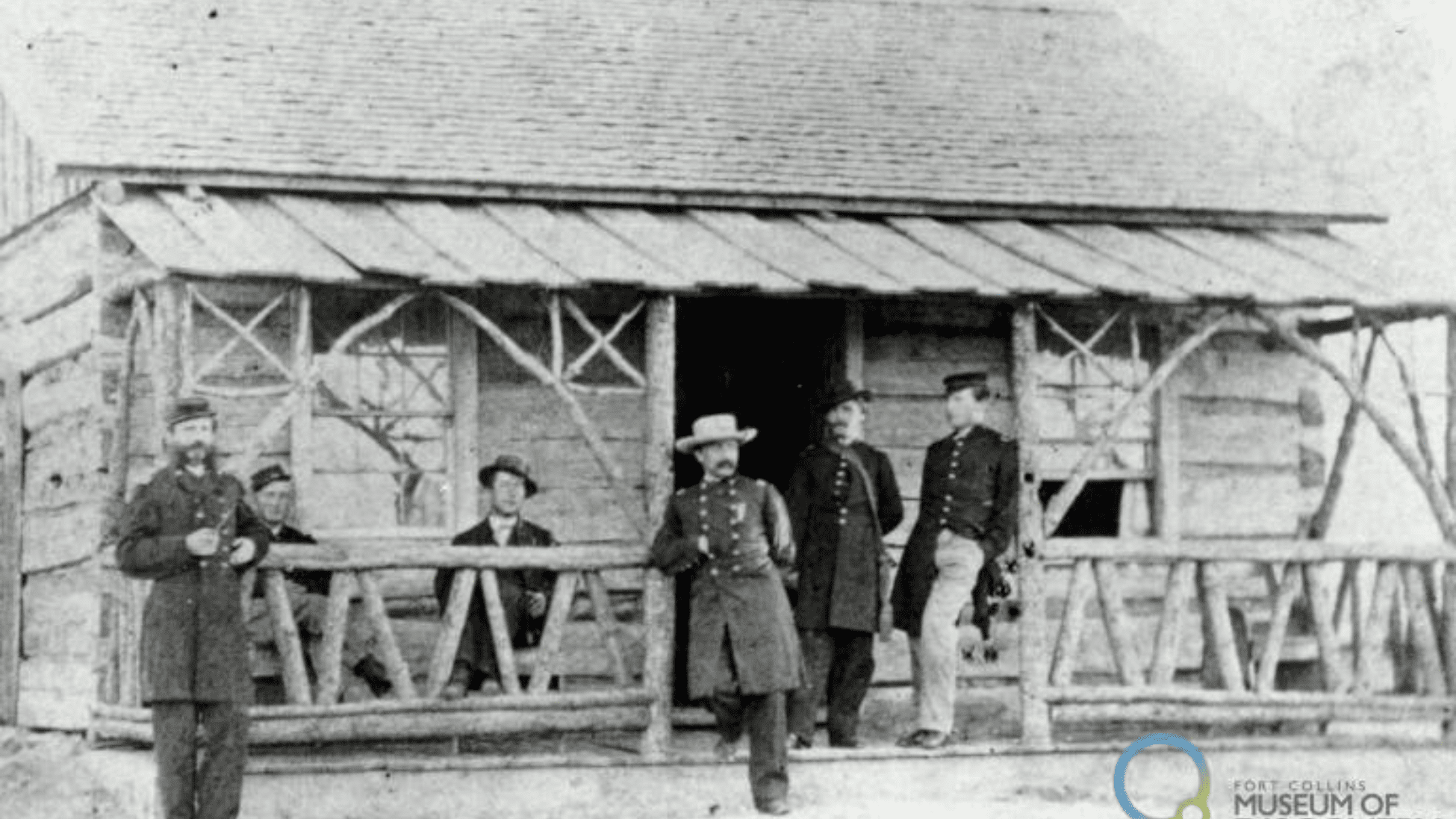
Fort Collins traces its origins to 1864, when the U.S. Army established Camp Collins along the Cache la Poudre River to protect settlers and overland mail routes. After a devastating flood destroyed the original camp near LaPorte, Lieutenant James Hanna — guided by local settler Joseph Mason — selected a new location on higher ground along the Poudre. This became the site of modern Fort Collins.
The military post was named for Lieutenant Colonel William O. Collins of Fort Laramie, Wyoming. The fort was manned primarily by Ohio Volunteer Cavalry troops and never had permanent walls. By 1866, a school and church had opened, and the town was platted. When the military post was abandoned in 1867, civilian settlers remained and began building a community.
In 1868, Fort Collins successfully petitioned to become the Larimer County seat, taking the designation from nearby LaPorte — a political shift that cemented the city’s role as the center of Northern Colorado.
The Agricultural Colony and Old Town
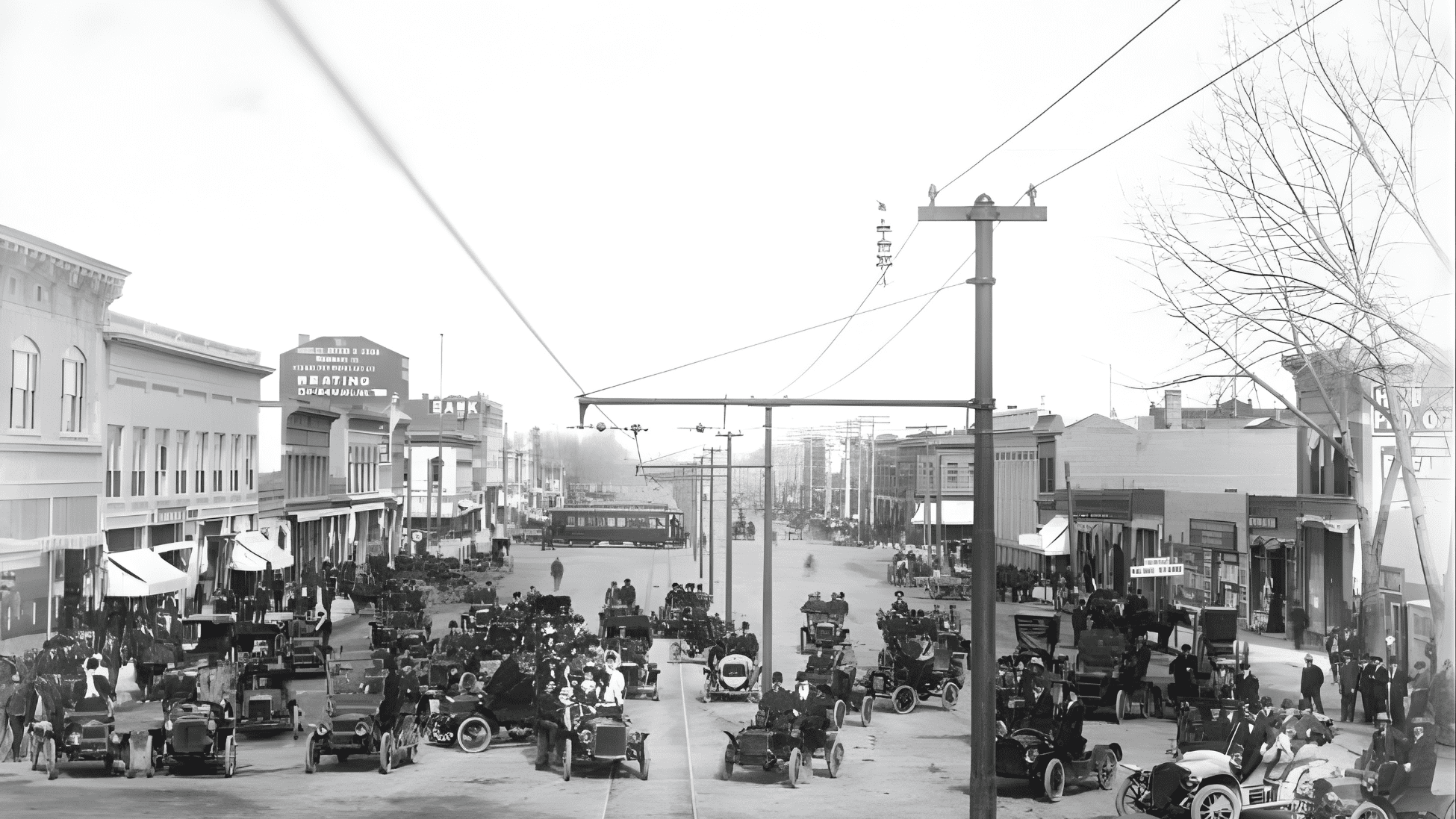
In 1872, the Fort Collins Agricultural Colony arrived, bringing hundreds of settlers who developed lots south of the original Old Town. Local surveyor Franklin Avery laid out the colony’s streets — famously making them exceptionally wide (College and Mountain Avenues are 140 feet across). Avery reportedly said: “There is plenty of room out here, and I’m going to use it.”
This wide-street design is one of the defining features of Fort Collins today and contributes to the city’s walkable, open feel — especially in the Old Town Historic District, which preserves the architecture and character of this era.
→ Related: 5 Reasons You’ll Love Historic Old Town Fort Collins
Colorado State University’s Founding
In 1870, the Agricultural College of Colorado was established as a land-grant institution — Colorado’s first. The college opened its doors to students in 1879 and was renamed Colorado State University in 1957. Today, CSU is a major public research university with over 33,000 students and is the city’s largest employer.
CSU’s presence shapes Fort Collins’ culture — from the youthful energy of Old Town to the research partnerships that attract technology and healthcare companies to the region. The campus itself is a beloved green space for the community, hosting concerts, farmers markets, and sporting events.
→ Related: Favorite Things We Love About Fort Collins
The Sugar Beet Boom and Early 1900s Growth
The arrival of the Colorado Central Railroad in 1877 transformed Fort Collins from a small settlement into a thriving agricultural center. But it was the sugar beet industry that fueled the city’s biggest early growth.
In 1903, the Great Western Sugar Company built a beet processing factory in Fort Collins, flooding the city with wealth and attracting a diverse population of farmers, laborers, and investors. New homes, businesses, a library, theaters, schools, parks, and churches were built during the prosperous first decade of the twentieth century.
By the 1920s, Fort Collins had become a destination for even Hollywood figures — actors like John Wayne and Olivia DeHavilland visited, drawn by the city’s fine amenities and natural beauty.
The Disneyland Connection
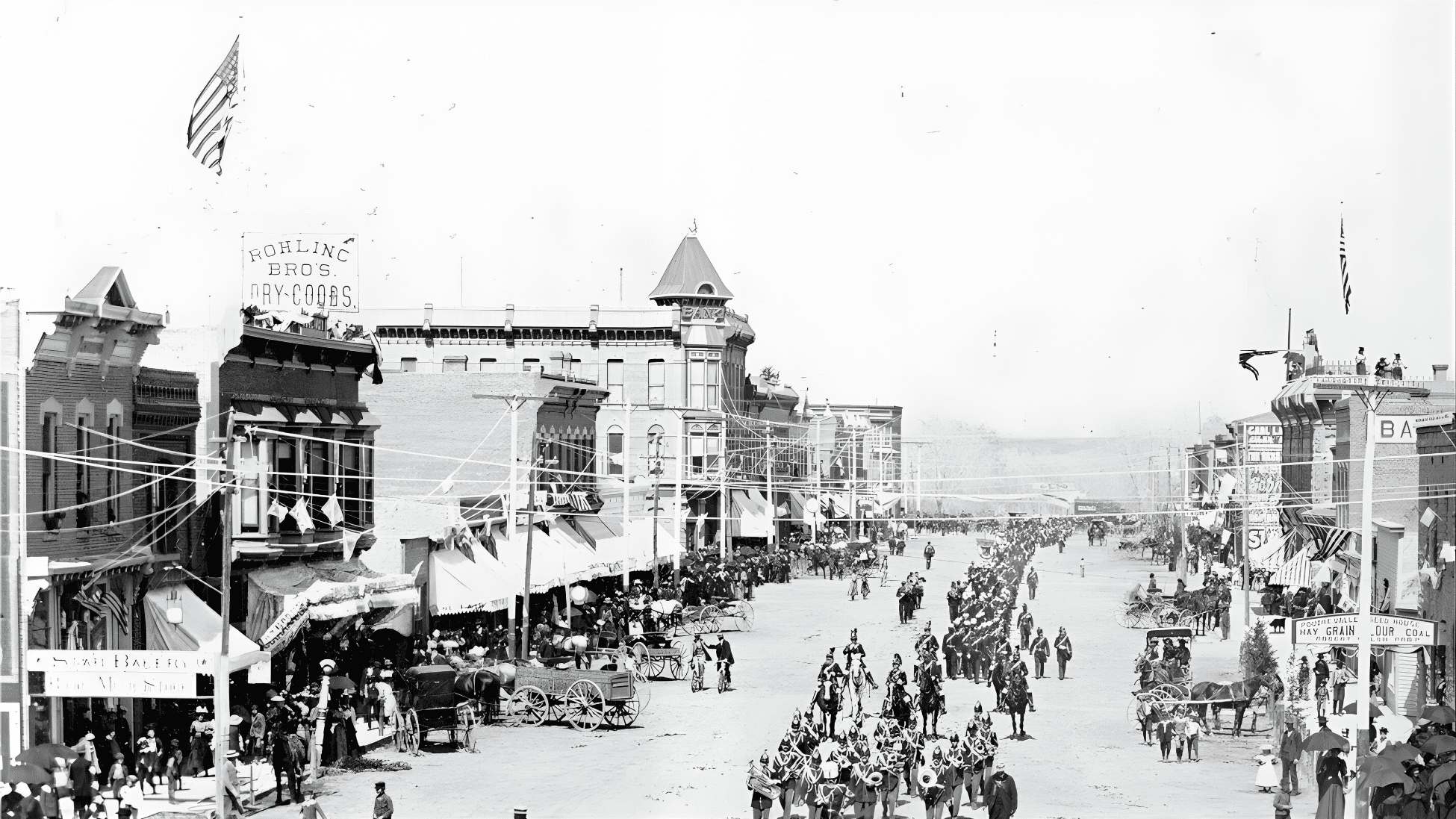
One of Fort Collins’ most famous claims: Disneyland’s Main Street U.S.A. was modeled after Historic Old Town Fort Collins.
Before constructing Disneyland, Walt Disney asked Hollywood art director Harper Goff to help design the park. Goff was born in 1911 and raised in Fort Collins, where his father owned the Fort Collins Express Courier newspaper. When drafting plans for Main Street U.S.A., Goff drew sketches based on his childhood memories of Old Town Fort Collins buildings — and those designs became one of the most iconic spaces in theme park history.
Walking through Old Town today, you can see the resemblance — the storefronts, the wide sidewalks, and the small-town charm that inspired a global icon.
→ Related: 6 Famous People Connected to Fort Collins
Modern Fort Collins
Today, Fort Collins is one of the fastest-growing and most popular cities in Colorado — with a population of approximately 170,000+ and a metro area approaching 375,000. The city has evolved from its agricultural roots into a hub for technology, healthcare, education, craft brewing, and outdoor recreation.
Key modern milestones include the Spring Creek Flood of 1997 (the city’s worst flood event, which led to major infrastructure improvements), the establishment of MAX Bus rapid transit in 2014, and the city’s continued recognition as one of the most bike-friendly, livable, and happiest cities in the U.S.
Fort Collins’ history isn’t just something you read about — it’s woven into the wide streets you drive, the Old Town buildings you walk past, and the community spirit that defines everyday life.
For a complete overview of relocating, visit our Moving to Fort Collins, Colorado — The Complete Relocation Guide.
→ Related: Best Craft Breweries in Fort Collins
→ Related: Map of Fort Collins Neighborhoods
Frequently Asked Questions About Fort Collins History
When was Fort Collins founded?
Fort Collins originated in 1864 as a military outpost (Camp Collins). The town was platted in 1866–1867 and officially incorporated in 1873. The Agricultural Colony of 1872 brought the city’s first major population boom.
Who was Fort Collins named after?
Fort Collins was named after Lieutenant Colonel William O. Collins of Fort Laramie, Wyoming, who commanded the military district that included the original Camp Collins.
Is Old Town Fort Collins the inspiration for Disneyland's Main Street?
Yes. Hollywood art director Harper Goff, who grew up in Fort Collins, based his sketches for Disneyland’s Main Street U.S.A. on his childhood memories of Old Town Fort Collins buildings.
When was Colorado State University founded?
The Agricultural College of Colorado was established in 1870 and opened to students in 1879. It was renamed Colorado State University in 1957. Today it has over 33,000 students.
What industry made Fort Collins grow in the early 1900s?
The sugar beet industry. The Great Western Sugar Company opened a factory in 1903, bringing wealth, jobs, and rapid growth to Fort Collins during the first two decades of the 1900s.
Has Fort Collins ever flooded?
Yes. The city has experienced 11 flood events since 1864. The worst was the Spring Creek Flood of 1997, which caused $200 million in damage and led to major flood infrastructure improvements.
~ By The Levi Group Brokered by Real ~
Your Personal Guide to Fort Collins

Thank you for visiting our blog dedicated to what it is like to live in Fort Collins Co. We created all this content with you in mind. This site has the most comprehensive content about Fort Collins Colorado. If you have any questions please don’t hesitate to reach out to us. We would love to visit with you and answer any questions you have.

Jason Levi
The Levi Group Brokered by REAL, LLC
Call Me: 970-426-8916
Text Me: 970-426-8916
Email Me: jason@thelevigroup.net
Stay Up to Date – Subscribe & Follow
Youtube Channel: @LeviGroupNoco
Facebook: Jason Levi
Instagram: @noco.jas
POPULAR POSTS
VIDEO ABOUT FORT COLLINS COLORADO
Have Questions?
INSPIRATIONAL QUOTE
The Fort Collins Experience is your comprehensive guide to everything Fort Collins Colorado. Whether you’re searching for the best things to do, researching schools and neighborhoods, exploring local breweries and outdoor adventures, hunting for great restaurants and hotels, or staying up to date on Fort Collins real estate trends — you’ll find it all here in one place. This site was built with a single goal: to give you a genuine, firsthand understanding of what it’s really like to live in Fort Collins. As a longtime resident and full-time Realtor, I’ve walked these streets, explored these communities, and experienced every corner of this city. I share that local insight so you don’t have to spend hours piecing together scattered information like I once did. Whether you’re relocating, investing, raising a family, or simply curious, The Fort Collins Experience will show you why so many people are drawn to northern Colorado. Fort Collins isn’t just a location — it’s a lifestyle shaped by nature, community, creativity, and opportunity. If you’re ready to discover what makes Fort Collins Colorado one of the most desirable places to live in the state, you’re exactly where you need to be.