
Fort Collins vs Greeley: Real Estate and Living Costs Compared
Fort Collins vs Greeley is one of the most practical comparisons in Northern Colorado real estate, because the two cities sit just 30 miles apart yet represent genuinely different financial realities. Greeley runs roughly 24 percent cheaper across the board, with median home prices $120,000 to $140,000 below Fort Collins, while Fort Collins delivers higher incomes, stronger school ratings, lower crime, and the walkable Old Town lifestyle that draws people to the region in the first place. Neither city is objectively better. The right answer depends entirely on your budget, your commute, and which trade-offs you are actually willing to live with. If you are researching moving to Fort Collins and weighing whether your dollar stretches further one county east, this guide gives you the real 2026 numbers instead of impressions.
Table of Contents
- Fort Collins vs Greeley At a Glance
- Home Prices and What Your Budget Buys
- Cost of Living Beyond Housing
- Income, Jobs, and the Local Economy
- Commute, Location, and Getting Around
- Schools and Education
- Safety and Crime
- Lifestyle, Downtown, and Culture
- Growth and What Comes Next
- Who Should Choose Fort Collins
- Who Should Choose Greeley
- Frequently Asked Question
Fort Collins vs Greeley At a Glance
| Category | Fort Collins | Greeley |
|---|---|---|
| Median home price | ~$548,000 to $564,000 | ~$420,000 to $445,000 |
| Price per square foot | ~$277 | ~$192 |
| Median rent | ~$1,661/month | ~$1,333/month |
| Cost of living index | ~129 (US avg = 100) | ~105 (US avg = 100) |
| Median household income | ~$83,598 | ~$68,650 to $69,881 |
| Population | ~175,000 | ~110,000 to 116,000 |
| Median age | ~29 to 31 years | ~32.5 years |
| Days on market | ~48 to 54 days | ~44 to 47 days |
| County | Larimer | Weld (county seat) |
| University anchor | Colorado State University | University of Northern Colorado |
Home Prices and What Your Budget Buys
The housing gap between these two cities is the single biggest factor in the Fort Collins vs Greeley decision. As of mid-2026, the median home price in Greeley runs approximately $420,000 to $445,000 depending on which data source you consult, while Fort Collins sits at roughly $548,000 to $564,000. That is a difference of $120,000 to $140,000 at the median, which translates directly into a meaningfully different monthly payment at current mortgage rates.
Price per square foot tells the story even more clearly. Greeley averages around $192 per square foot compared to roughly $277 in Fort Collins, meaning your budget buys close to 45 percent more house in Greeley for the same dollar. For a family that needs four bedrooms and a finished basement, that difference is not academic. It is often the difference between qualifying and not qualifying.
Both markets have cooled from their peaks in similar ways. Greeley homes are selling in about 44 to 47 days at roughly 98.9 percent of asking price, with about 37.5 percent of listings taking a price reduction. Fort Collins runs 48 to 54 days at a comparable 98.8 to 99 percent sale-to-list ratio. Neither city is in distress, and neither is a runaway seller’s market. In both places, well-priced homes still move and overpriced homes still sit.
→ Related: What Homes Cost in Fort Collins
Cost of Living Beyond Housing
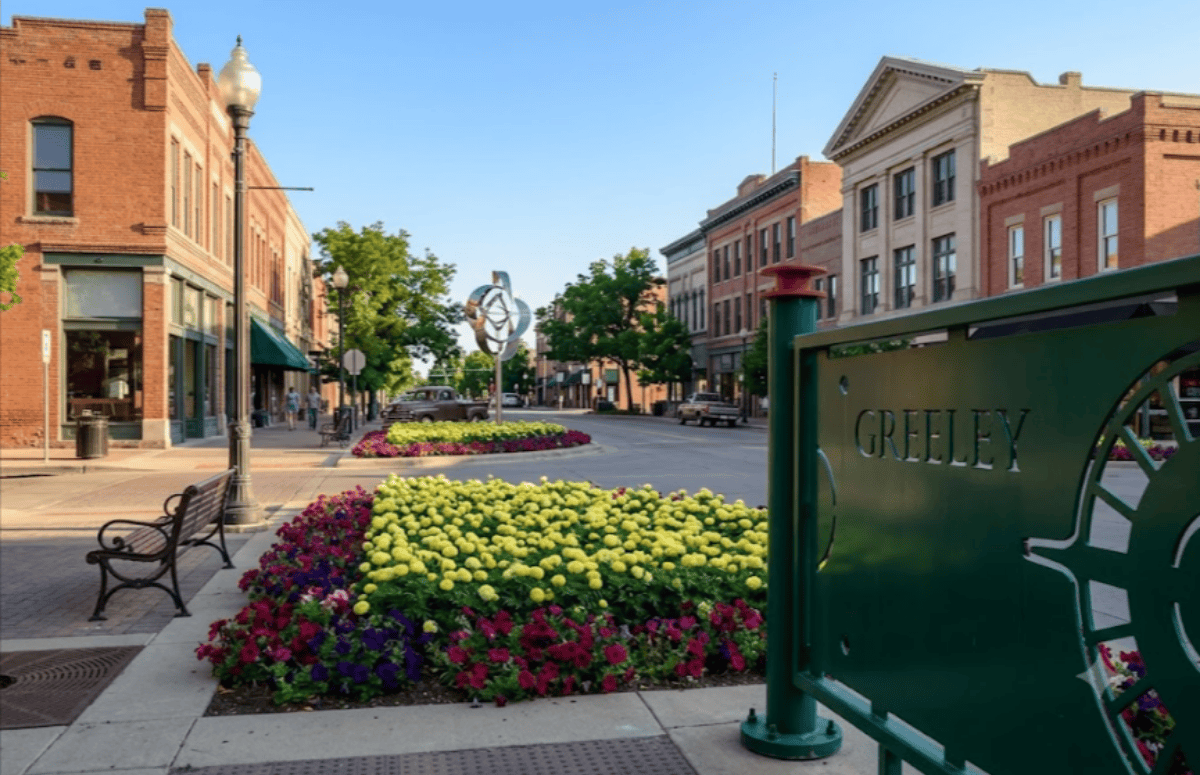
Housing drives most of the gap, but it is not the whole story. Greeley carries an overall cost of living index of roughly 105 compared to Fort Collins at 129, with the US average set at 100. That works out to Greeley being approximately 24 percent less expensive overall for a comparable household.
Rent follows the same pattern. Median rent in Greeley runs about $1,333 per month against roughly $1,661 in Fort Collins, a difference of around $328 monthly or nearly $4,000 per year. For renters saving toward a down payment, that gap compounds quickly.
Beyond housing, the two cities are more similar than different. Both sit in Colorado with the same state tax structure, no state grocery tax, and a property tax rate around 0.55 percent. Groceries, utilities, and fuel run close to each other. The categories where Fort Collins costs noticeably more are the ones tied to land and demand: housing, dining out, and services priced to a higher-income customer base.
→ Related: Cost of Living in Fort Collins Colorado
Income, Jobs, and the Local Economy
Here is where the comparison gets more nuanced than most guides admit. Median household income in Fort Collins is approximately $83,598 compared to roughly $68,650 to $69,881 in Greeley, a gap of about 21 percent. On the surface that suggests Fort Collins simply pays better.
The reality is more specific. For the same role at a comparable company, Greeley employers actually pay marginally more on average than Fort Collins employers do. The household income gap reflects the mix of industries and occupations in each city rather than lower pay for equivalent work. Fort Collins has a heavier concentration of technology, bioscience, and university-affiliated professional roles anchored by Colorado State University, Hewlett-Packard, Intel, Broadcom, and UCHealth. Greeley’s economy leans toward agriculture, food processing, energy, healthcare, and education anchored by the University of Northern Colorado and Banner Health.
Greeley’s job market momentum is also real and worth taking seriously. WalletHub recently ranked Greeley first in the country for jobs and the economy, and Forbes listed the Greeley metropolitan area as the sixth fastest-growing job market nationally. That is not a small-town consolation prize. For buyers whose careers fit Greeley’s industry mix, the affordability advantage comes without a meaningful income penalty.
Commute, Location, and Getting Around
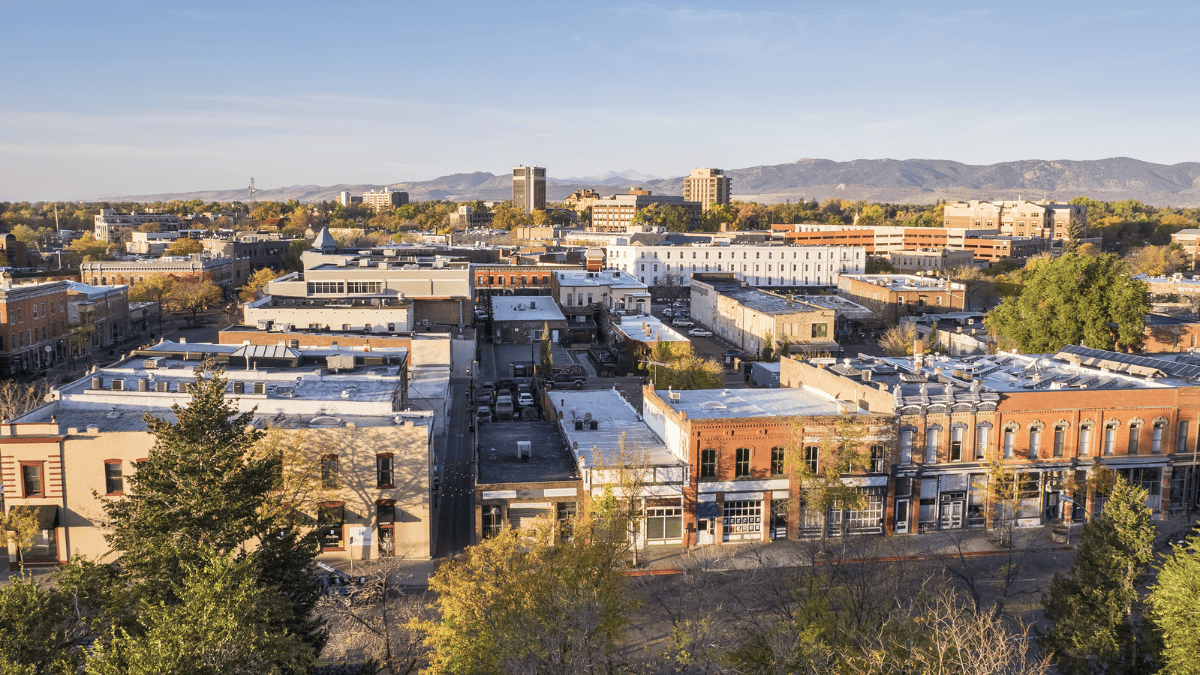
Greeley sits approximately 30 miles east of Fort Collins, a drive of roughly 30 to 40 minutes via Highway 34 or the county road network depending on route and time of day. That distance puts the two cities well within normal daily commuting range of each other, and plenty of Northern Colorado households do exactly that: buy in Greeley for the price, commute to Fort Collins for the job.
The trade-off is that the commute is real and it accumulates. Thirty-five minutes each way is roughly 12 hours per month behind the wheel, plus fuel and vehicle wear. Greeley’s average commute runs about 25 minutes overall, and only 8.2 percent of Greeley residents work from home compared to a national average of 14 percent, which tells you this is a city where most people drive to work.
Location also affects mountain access. Fort Collins sits directly against the foothills, with Horsetooth Reservoir minutes from town and Rocky Mountain National Park about an hour away. Greeley sits further out on the plains, adding roughly 30 minutes to most mountain trips. For buyers who moved to Colorado specifically for weekend mountain access, that half hour matters more than it looks on a map.
→ Related: How Far Is Fort Collins From Denver
Schools and Education
Fort Collins schools fall under Poudre School District, which serves roughly 52 schools and consistently earns strong performance ratings across the district. Fort Collins also has one of the highest educational attainment rates of any mid-sized American city, which shapes the culture inside and around the schools.
Greeley is served by Greeley-Evans School District 6, and the picture there is more variable. District-wide averages on public rating platforms run lower than Poudre’s, though those averages mask real differences between individual schools. Some Greeley schools perform very well, particularly certain charter and magnet options, while others pull the average down. It is also worth knowing that popular school rating scores correlate heavily with neighborhood income demographics, so they measure something narrower than teaching quality.
The practical takeaway for buyers is the same in both cities but more consequential in Greeley: check the specific school your address is zoned for rather than relying on a district-level number. In Fort Collins the district floor is high enough that most families are satisfied. In Greeley the range is wider, so the individual school matters more to your outcome.
→ Related: Schools When Moving to Fort Collins
Safety and Crime
Fort Collins has a lower crime rate than Greeley, and this is one of the clearer differences between the two cities. Numbeo places Fort Collins at a crime index of 31.9 with a safety score of 68.1, which reads as low crime. Greeley’s numbers run higher across both violent and property crime categories, with property crime making up the largest share of reported incidents, a pattern consistent with cities carrying higher poverty and unemployment rates.
Sources disagree on how to characterize the severity. NeighborhoodScout’s analysis places Greeley’s crime rate well above the national average for cities of similar size. Other assessments give Greeley a moderate B-minus safety grade, noting that its lower population density and community investment offset some risk factors. The Greeley Police Department reported year-over-year improvement in its most recent annual crime statistics.
The honest read is that Greeley’s crime rate is meaningfully higher than Fort Collins but not uniformly distributed across the city, and it appears to be trending in the right direction. As in any city, some Greeley neighborhoods score well below the city average and others well above. Buyers should look at neighborhood-level data rather than the citywide number, and should visit prospective areas at different times of day before committing.
Lifestyle, Downtown, and Culture
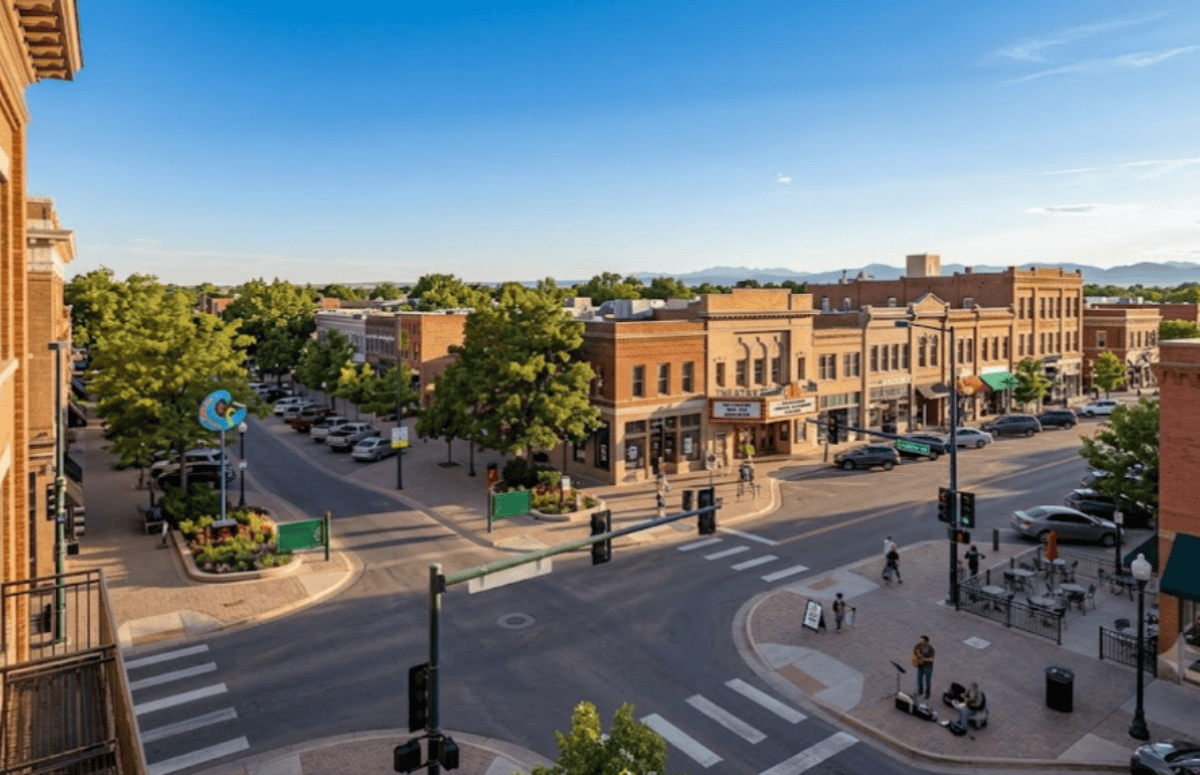
Fort Collins has the more established lifestyle draw, and it is not particularly close. Old Town Fort Collins ranks among the best public squares in the country, with a dense walkable core of independent shops, more than 20 craft breweries including New Belgium and Odell, live music, and a year-round festival calendar. Add 285-plus miles of bike trails, a Platinum-level bicycle-friendly designation held by only three US communities, and the Cache la Poudre River running through town, and the outdoor-plus-downtown combination is the reason Fort Collins commands the price premium it does.
Greeley’s cultural offering is smaller but improving in ways worth noting. The city is midway through a substantial downtown revitalization effort centered on a new Civic Campus, Lincoln Park improvements, new plazas, and better connections to the Poudre River. The University of Northern Colorado brings a student population, performing arts programming, and college athletics. The Greeley Stampede remains one of the largest events in Northern Colorado. It is a city actively investing in becoming more attractive rather than one coasting on what it already has.
One practical detail buyers regularly discover after moving rather than before: Greeley’s proximity to cattle feedlots and agricultural processing produces noticeable odors on certain wind patterns. It is not constant and it is not everywhere in the city, but it is real, and it is worth visiting a prospective neighborhood on a few different days before you decide it will not bother you.
→ Related: Historic Old Town Fort Collins

Growth and What Comes Next
Both cities are growing, but along different trajectories. Greeley’s population has climbed roughly 22.6 percent since 2010, reaching approximately 110,000 to 116,000 depending on the estimate, and continues expanding at about 1.2 percent annually. Fort Collins, by contrast, has seen relatively flat growth within city limits since 2020, with most of the visible Northern Colorado expansion happening in Timnath, Windsor, Wellington, and Greeley rather than Fort Collins proper.
That difference matters for buyers thinking about long-term value. Fort Collins is constrained by growth management policy and limited developable land, which has historically supported home values by keeping supply tight. Greeley has more room to build, which keeps housing affordable but also means more new inventory competing with existing homes.
Greeley’s growth has also brought genuine friction. A February 2026 voter-approved repeal of the zoning ordinance behind the proposed Cascadia development in West Greeley showed that residents are actively contesting how and where the city expands. Buyers looking at newer Greeley subdivisions should ask about the status of nearby planned developments, since what is currently an open field may or may not stay that way.
Who Should Choose Fort Collins
Fort Collins is the stronger fit for buyers who can comfortably afford the roughly $548,000 to $564,000 median and who value what that premium actually buys: a walkable downtown, immediate foothills and reservoir access, consistently strong schools across the district, lower crime, and a job market weighted toward technology, bioscience, healthcare, and the university.
It works particularly well for remote workers who are not tied to a local employer, families who want a high district-wide school floor without researching individual schools, buyers whose outdoor lifestyle is central to why they moved to Colorado, and anyone whose career sits in Fort Collins’ core industries. It also suits buyers who see Fort Collins’ constrained land supply as a long-term value story rather than just a higher price tag.
Who Should Choose Greeley
Greeley is the stronger fit for buyers where monthly payment is the binding constraint, and that describes far more households in 2026 than it did five years ago. Roughly 45 percent more square footage per dollar is not a marginal advantage. For first-time buyers, growing families who need space, and anyone who has been priced out of Larimer County, Greeley is often the difference between owning and continuing to rent.
It also works well for buyers whose careers align with Greeley’s economy in agriculture, energy, food processing, healthcare, or education, since the local job market is genuinely strong and the pay for equivalent roles is competitive. Younger buyers may appreciate the median age of 32.5 and the energy the University of Northern Colorado brings. And for buyers who want to be part of a city that is visibly investing in its own future rather than one that is already finished, Greeley’s downtown revitalization makes a real case.
The comparison ultimately comes down to a straightforward question: are you buying a lifestyle or buying square footage? Fort Collins wins on the former and Greeley wins decisively on the latter. Buyers who are honest with themselves about which one they actually need tend to be happier with the decision a few years later. For anyone weighing moving to Fort Collins against the surrounding Northern Colorado options, the most useful next step is running both cities against your actual monthly budget and your actual commute rather than comparing list prices in the abstract.
Frequently Asked Questions
Is Greeley cheaper than Fort Collins?
Yes, Greeley is significantly cheaper than Fort Collins. Greeley carries a cost of living index of roughly 105 compared to Fort Collins at 129, making Greeley approximately 24 percent less expensive overall. Median rent runs about $1,333 in Greeley versus $1,661 in Fort Collins, and median home prices are roughly $120,000 to $140,000 lower.
What is the median home price in Greeley versus Fort Collins in 2026?
The median home price in Greeley is approximately $420,000 to $445,000 as of mid-2026 depending on the data source, while Fort Collins runs approximately $548,000 to $564,000. Price per square foot shows the gap even more clearly, at roughly $192 in Greeley compared to $277 in Fort Collins.
How far is Greeley from Fort Collins?
Greeley is approximately 30 miles east of Fort Collins, a drive of about 30 to 40 minutes via Highway 34 or County Road 17 depending on traffic and route. Many Northern Colorado households live in one city and commute to the other, since the two are well within a normal daily commuting range.
Is Fort Collins or Greeley better for families?
Fort Collins generally rates higher for families on school performance and safety metrics, with Poudre School District earning strong ratings and a lower overall crime index. Greeley offers substantially more affordable housing and a younger median age of 32.5, which appeals to first-time buyers and young families, though buyers should research individual Greeley-Evans District 6 schools since ratings vary widely by school.
Are salaries higher in Fort Collins or Greeley?
Median household income is higher in Fort Collins at approximately $83,598 compared to roughly $68,650 to $69,881 in Greeley, a difference of about 21 percent. However, for the same job at a comparable company, Greeley employers pay slightly more on average, meaning the household income gap reflects differences in the mix of local industries and occupations rather than lower pay for equivalent roles.
Is Greeley a good place to live in 2026?
Greeley is a good place to live for buyers prioritizing affordability, a strong job market, and a growing city, with WalletHub ranking it number one in the country for jobs and the economy and Forbes ranking the Greeley metro the sixth fastest-growing job market nationally. The trade-offs include a higher crime rate than Fort Collins, more variable school ratings, and agricultural odors on certain wind patterns.
~ By The Levi Group Brokered by Real ~
Your Personal Guide to Fort Collins

Thank you for visiting our blog dedicated to what it is like to live in Fort Collins Co. We created all this content with you in mind. This site has the most comprehensive content about Fort Collins Colorado. If you have any questions please don’t hesitate to reach out to us. We would love to visit with you and answer any questions you have.

Jason Levi
The Levi Group Brokered by REAL, LLC
Call Me: 970-426-8916
Text Me: 970-426-8916
Email Me: jason@thelevigroup.net
Stay Up to Date – Subscribe & Follow
Youtube Channel: @LeviGroupNoco
Facebook: Jason Levi
Instagram: @noco.jas
POPULAR POSTS
VIDEO ABOUT FORT COLLINS COLORADO
Have Questions?
INSPIRATIONAL QUOTE
The Fort Collins Experience is your comprehensive guide to everything Fort Collins Colorado. Whether you’re searching for the best things to do, researching schools and neighborhoods, exploring local breweries and outdoor adventures, hunting for great restaurants and hotels, or staying up to date on Fort Collins real estate trends — you’ll find it all here in one place. This site was built with a single goal: to give you a genuine, firsthand understanding of what it’s really like to live in Fort Collins. As a longtime resident and full-time Realtor, I’ve walked these streets, explored these communities, and experienced every corner of this city. I share that local insight so you don’t have to spend hours piecing together scattered information like I once did. Whether you’re relocating, investing, raising a family, or simply curious, The Fort Collins Experience will show you why so many people are drawn to northern Colorado. Fort Collins isn’t just a location — it’s a lifestyle shaped by nature, community, creativity, and opportunity. If you’re ready to discover what makes Fort Collins Colorado one of the most desirable places to live in the state, you’re exactly where you need to be.