
Is Fort Collins Worth It? 10 Honest Truths
Is Fort Collins worth it? It’s a fair question, and it deserves the honest version rather than the tourism-board highlight reel. The truthful answer is that Fort Collins is genuinely worth it for a specific kind of buyer, one who values the outdoor lifestyle, low property taxes, and a strong long-term housing market, and can absorb a cost of living that runs above the national average. For other buyers, the trade-offs land harder. This guide lays out 10 real pros and cons, the good and the not-so-good, so you can decide where you fall before you plan a move. If you are seriously researching moving to Fort Collins, this is the clear-eyed breakdown worth reading first.
Table of Contents
- Fort Collins At a Glance
- Home Values and Long-Term Appreciation
- The Cost of Living
- Low Property Taxes
- The Weather and 300 Days of Sun
- The Flip Side of the Climate
- Summer Air Quality
- The Job Market
- The Outdoor Lifestyle
- Old Town and Downtown
- Rapid Growth and Traffic
- The Hidden Costs
- The Verdict: Who Fort Collins Is Worth It For
- Frequently Asked Questions
Fort Collins At a Glance
| Factor | 2026 Reality | Verdict |
|---|---|---|
| Median home price | ~$545,000 to $605,000 | Strong long-term value, high entry cost |
| Property tax rate | ~0.55% effective | ✅ Among the lowest in the country |
| Cost of living | Above national average | ⚠️ Budget carefully |
| Sunshine | 300+ days per year | ✅ Major quality-of-life draw |
| Summer air quality | Ozone and wildfire smoke alerts | ⚠️ Real seasonal downside |
| Job market | Stable but industry-concentrated | ⚠️ Strong for some fields, narrow for others |
| Outdoor access | Trails, foothills, RMNP within an hour | ✅ The core reason people stay |
| Growth and traffic | Congestion on College and Harmony | ⚠️ Increasing with regional growth |
Home Values and Long-Term Appreciation
Start with the reason many buyers consider Fort Collins a smart place to plant money rather than just live: the housing market holds up. As of 2026, the median home price sits somewhere in the $545,000 to $605,000 range depending on the source and property type, and while values cooled modestly year-over-year, the long-term trajectory has been consistently upward. Limited developable land inside the city’s growth-management boundary keeps supply tight, which has historically supported values through national slowdowns better than most Front Range markets.
For a buyer thinking in terms of five, ten, or twenty years, that matters. Fort Collins has not been a boom-and-bust market. It has been a steady-appreciation market, and steady is what builds equity over time. The catch is that this same dynamic is exactly what pushes the entry price up, which leads directly into the first real con.
→ Related: What Homes Cost in Fort Collins

The Cost of Living
Here is the honest counterweight to the appreciation story: Fort Collins is not cheap. The overall cost of living runs above the national average, driven primarily by housing. Buyers relocating from lower-cost states routinely find they get less house for more money than they expected, and renters near downtown or Colorado State University feel the same squeeze. On top of the mortgage, Fort Collins raised its total sales tax in January 2026, so day-to-day spending carries a slightly higher rate than it did a year ago.
None of this makes Fort Collins unaffordable, but it does mean the city rewards buyers who plan realistically. The mortgage is only part of the picture, and budgeting for the full cost of living here, rather than just the listing price, is the difference between comfortable and stretched.
→ Related: Cost of Living in Fort Collins Colorado
Low Property Taxes
One genuine financial bright spot partially offsets the cost of living: property taxes. Colorado has an effective property tax rate of roughly 0.55 percent, which ranks among the lowest in the entire country. On a $550,000 home, that is a dramatically smaller annual tax bill than a buyer would face on a similarly priced home in states like Texas, Illinois, or New Jersey, where rates can run three to four times higher.
This is a detail that changes the real math of ownership. When you compare Fort Collins to other desirable cities on total monthly housing cost rather than sticker price alone, the low property tax narrows the gap considerably. It is one of the clearest and most underrated financial advantages of buying here.

The Weather and 300 Days of Sun
Fort Collins delivers more than 300 days of sunshine a year, and the semi-arid climate is a legitimate quality-of-life draw. The dry air changes how temperatures feel: a hot summer afternoon is far more comfortable than the same temperature in a humid climate, and a sunny winter day at this elevation can feel genuinely pleasant even when the thermometer reads cold. Snow does fall, but it tends to melt quickly rather than lingering for weeks.
For people relocating from gray, wet, or humid parts of the country, the sheer amount of sunshine is often one of the first things they mention loving after the move. It shapes the whole rhythm of life here, making the outdoor lifestyle possible nearly year-round.
The Flip Side of the Climate
The same climate has an honest downside worth setting expectations around. Fort Collins sits at 5,003 feet, and the sun at altitude is significantly stronger than at sea level, so sun protection matters more here than most newcomers expect. Spring brings wind and the region’s notorious hail, which can damage roofs and vehicles across a neighborhood in minutes and is a real driver of rising home insurance premiums. Winters, while sunny, still bring cold snaps and icy roads, and north-facing driveways can hold snow and ice most of the season because the house shades them from the melting sun.
None of this rises to the level of a deal-breaker for most buyers, but it is the part of the climate story the brochure skips, and it is worth knowing before you assume 300 days of sun means effortless weather.

Summer Air Quality
This is the con that almost never appears in a relocation pitch, and it deserves honest attention: summer air quality on the Front Range, including Fort Collins, has become a real seasonal issue. Ground-level ozone forms when summer heat cooks vehicle and industrial emissions, and wildfire smoke drifting in from fires across the West stacks particle pollution on top of it. By mid-summer 2026, the Colorado Department of Public Health and Environment had already issued 20 ozone action alerts for the northern Front Range, up from 13 at the same point the previous year, with Fort Collins named specifically in the affected corridor.
On the worst days, health officials advise sensitive groups, including children, older adults, and anyone with respiratory conditions, to limit strenuous outdoor activity during afternoon and evening hours. For a city whose entire appeal is built on outdoor living, this is a meaningful trade-off, and experts increasingly describe it as a recurring annual pattern rather than an occasional bad year. Buyers who are sensitive to air quality, or who have family members who are, should weigh the summer months honestly rather than assuming year-round pristine mountain air.
The Job Market
Fort Collins has a stable, highly educated job market, but it is narrower than a major metro, and that is the honest framing buyers need. The economy is anchored by Colorado State University, Hewlett-Packard, Intel, Broadcom, and UCHealth, with genuine strength in technology, bioscience, healthcare, semiconductors, and education. For workers in those fields, the local market is strong and the pay is competitive.
The limitation is concentration. If your career sits outside those core industries, you may find fewer local openings than you would in Denver or a larger metro, and you may end up commuting south or relying on remote work. Remote workers, in fact, tend to get the best of Fort Collins: the lifestyle and the housing value without the job-market ceiling. Buyers tied to a specific local employer should research their field’s depth here before assuming the opportunities will match a big city.
The Outdoor Lifestyle
If there is one pro that keeps people in Fort Collins for good, it is the outdoor lifestyle, and it is not exaggerated. Horsetooth Reservoir sits essentially at the city’s edge for boating, paddleboarding, and swimming. The foothills and trails at Lory State Park and Horsetooth Mountain Open Space are minutes away. The Cache la Poudre River, Colorado’s only federally designated Wild and Scenic River, runs right through the region. Rocky Mountain National Park is about an hour away. And with 285-plus miles of bike trails and a Platinum-level bike-friendly designation held by only three US communities, daily life here is built around being outside.
For buyers who moved to Colorado specifically to live outdoors rather than just visit the outdoors on weekends, Fort Collins delivers that access more immediately and more affordably than almost anywhere else on the Front Range. This is the single most common reason residents give for why the trade-offs are worth it.
→ Related: Favorite Hikes in Northern Colorado

Old Town and Downtown
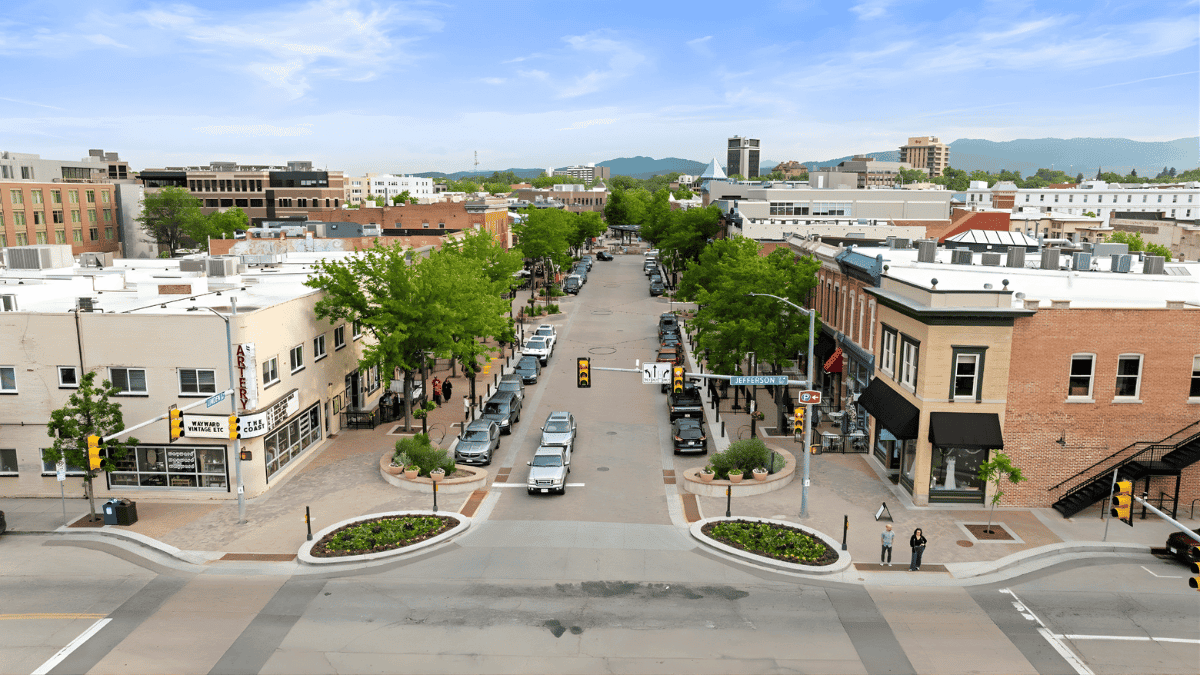
Old Town Fort Collins is the cultural heart of the city and a genuine daily-life asset, not just a tourist stop. It consistently ranks among the best public squares in the country, with a walkable core of independent shops, restaurants, live music, farmers markets, and a craft brewery scene anchored by New Belgium and Odell that draws people from across the region. The plaza fills with families and dogs in the fountain through the summer, and the year-round festival calendar keeps it active in every season.
What makes Old Town matter for a relocation decision is that it gives Fort Collins a real downtown to belong to, the kind of walkable, community-driven center that many similarly sized cities simply do not have. It is a large part of why the city feels like more than a bedroom community, and why residents describe it as somewhere they actually go rather than somewhere they drive past.
→ Related: Historic Old Town Fort Collins

Rapid Growth and Traffic
The Northern Colorado region has been one of the fastest-growing areas in the state, and that growth cuts both ways. It supports the economy, amenities, and home values, but it has also brought more cars, more construction, and more congestion. Corridors like College Avenue and Harmony Road can back up during rush hour and around Colorado State University events, and I-25 construction periodically slows the drive south. Longtime residents remember when there was almost no congestion at all, and while newcomers from larger cities often still find Fort Collins traffic manageable by comparison, the trend line is pointing toward busier, not quieter.
For buyers specifically seeking a quiet, unchanging small town, it is worth knowing that this part of Northern Colorado is very much still in motion, and that pace is not expected to slow soon. The growth is a feature for the economy and a friction for daily driving, and honest buyers weigh both.
Beyond the obvious mortgage and cost of living, Fort Collins and the surrounding communities carry a few costs that surprise buyers after closing rather than before. The biggest is the metro district tax common in newer subdivisions, particularly in surrounding towns like Timnath and parts of Windsor. These special taxing districts fund community infrastructure and can add a few hundred dollars per month to your effective housing cost on top of any HOA fees, and they do not show up in a headline price or a basic mortgage estimate.
Other line items add up too: rising home insurance premiums driven by hail and wildfire risk, higher irrigation costs in a semi-arid climate if you want a traditional lawn, and HOA dues in many newer communities. None of these are unique to Fort Collins, but together they can meaningfully change the real monthly cost of a home versus what the listing suggests. The buyers who are happiest here are the ones who ask about these costs specifically before writing an offer rather than discovering them afterward.
The Verdict: Who Fort Collins Is Worth It For
So, is Fort Collins worth it? For the right buyer, clearly yes. If you value an outdoor lifestyle you will actually use daily, want some of the lowest property taxes in the country, and are buying into a housing market with a strong long-term track record, Fort Collins delivers on all three in a way few Front Range cities match. It is especially worth it for remote workers, outdoor-focused families and retirees, and buyers in the technology, bioscience, healthcare, and education fields that anchor the local economy.
It is a harder yes for buyers whose careers fall outside the core local industries, who are highly sensitive to summer air quality, or who need a lower cost of living or a quiet, no-growth small town. Those are real trade-offs, not marketing footnotes, and being honest about which side of them you fall on is the whole point of asking whether Fort Collins is worth it in the first place. For anyone weighing that question seriously and researching moving to Fort Collins, the best next step is running the specific numbers and priorities of your own situation against these 10 realities rather than the highlight reel.
Frequently Asked Questions
Is Fort Collins worth it in 2026?
Fort Collins is worth it in 2026 for buyers who value an outdoor lifestyle, low property taxes, and strong long-term home values, and who can comfortably afford a cost of living above the national average. The main trade-offs are the higher cost of living, a job market that is strong but narrower than a major metro, summer air quality issues on certain days, and traffic tied to rapid regional growth.
What are the biggest downsides of living in Fort Collins?
The most common downsides of living in Fort Collins are the higher-than-average cost of living, a job market that is concentrated in a few industries, summer air quality affected by ozone and wildfire smoke, growth-related traffic on corridors like College Avenue and Harmony Road, and hidden costs such as metro district taxes in newer communities.
What do people love most about living in Fort Collins?
Residents most often cite the outdoor lifestyle, more than 300 days of sunshine per year, some of the lowest property taxes in the country, the historic and walkable Old Town, and strong long-term home appreciation as the biggest reasons they choose Fort Collins and stay.
Are property taxes low in Fort Collins Colorado?
Yes, property taxes in Fort Collins are among the lowest in the country. Colorado’s effective property tax rate runs around 0.55 percent, well below the national average, which meaningfully lowers the true monthly cost of owning a home even though home prices themselves are above average.
How is the air quality in Fort Collins?
Fort Collins air quality is generally good for much of the year but degrades during summer, when ground-level ozone and wildfire smoke can trigger air quality advisories. In 2026, the Front Range including Fort Collins saw 20 ozone action alerts by mid-summer, up from 13 at the same point the prior year, so buyers sensitive to air quality should factor summer conditions into their decision.
Is the job market good in Fort Collins?
Fort Collins has a stable and educated job market anchored by Colorado State University, Hewlett-Packard, Intel, Broadcom, and UCHealth, with particular strength in technology, bioscience, healthcare, and education. The trade-off is that it is narrower than a major metro, so buyers in fields outside those core industries may find fewer local opportunities and often commute or work remotely.
~ By The Levi Group Brokered by Real ~
Your Personal Guide to Fort Collins

Thank you for visiting our blog dedicated to what it is like to live in Fort Collins Co. We created all this content with you in mind. This site has the most comprehensive content about Fort Collins Colorado. If you have any questions please don’t hesitate to reach out to us. We would love to visit with you and answer any questions you have.

Jason Levi
The Levi Group Brokered by REAL, LLC
Call Me: 970-426-8916
Text Me: 970-426-8916
Email Me: jason@thelevigroup.net
Stay Up to Date – Subscribe & Follow
Youtube Channel: @LeviGroupNoco
Facebook: Jason Levi
Instagram: @noco.jas
POPULAR POSTS
VIDEO ABOUT FORT COLLINS COLORADO
Have Questions?
INSPIRATIONAL QUOTE
The Fort Collins Experience is your comprehensive guide to everything Fort Collins Colorado. Whether you’re searching for the best things to do, researching schools and neighborhoods, exploring local breweries and outdoor adventures, hunting for great restaurants and hotels, or staying up to date on Fort Collins real estate trends — you’ll find it all here in one place. This site was built with a single goal: to give you a genuine, firsthand understanding of what it’s really like to live in Fort Collins. As a longtime resident and full-time Realtor, I’ve walked these streets, explored these communities, and experienced every corner of this city. I share that local insight so you don’t have to spend hours piecing together scattered information like I once did. Whether you’re relocating, investing, raising a family, or simply curious, The Fort Collins Experience will show you why so many people are drawn to northern Colorado. Fort Collins isn’t just a location — it’s a lifestyle shaped by nature, community, creativity, and opportunity. If you’re ready to discover what makes Fort Collins Colorado one of the most desirable places to live in the state, you’re exactly where you need to be.